Showing posts with label Written by Gemini. Show all posts

29 October, 2025

The Rise of Retrieval-Augmented Generation (RAG): How Modern AI Gets Its Facts Right and Transforms Web Resources

In the world of **Computers & Electronics** and **AI content**, Large Language Models (LLMs) like ChatGPT and Gemini have become indispensable. However, you've likely noticed a critical flaw: they sometimes "hallucinate," confidently providing incorrect or outdated information. This is where a revolutionary approach called **Retrieval-Augmented Generation (RAG)** steps in, transforming these powerful **tech tools** from fluent guessers into informed, factual assistants.

At **Smart Web & AI Resources**, we track the core **AI content** and **websites** innovations that are shaping the future. RAG technology is arguably the most important evolutionary leap in making AI reliable, relevant, and trustworthy, fundamentally changing how we access and use information on the web.

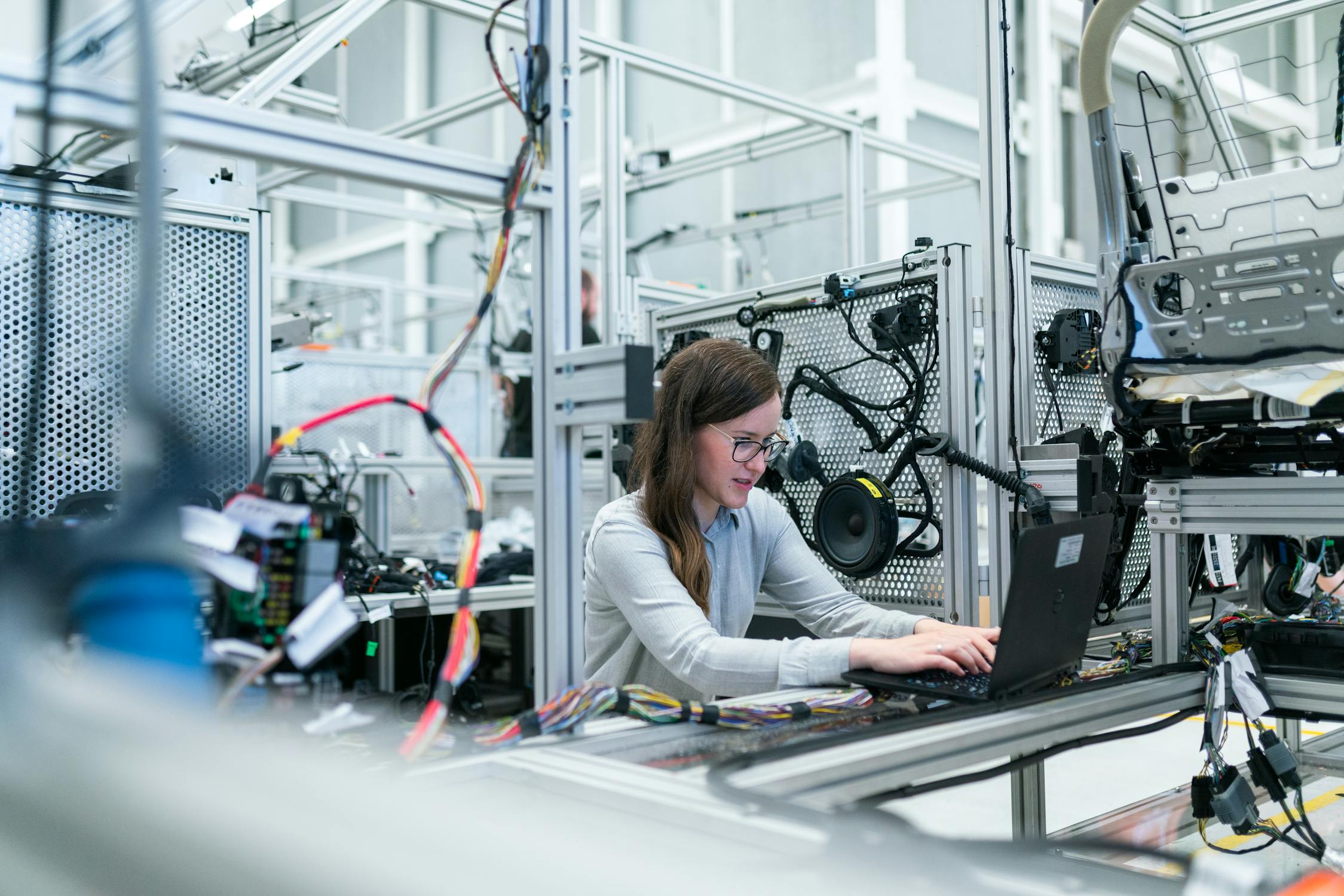
Close-up of a screen displaying technical data and code, representing accurate tech tools.

The Hallucination Problem: Why Pure LLMs Need an Upgrade

To understand RAG, we first need to understand the limitation of a traditional LLM. A standard LLM is trained on a massive, static dataset (the entire internet up to a certain cutoff date). When you ask it a question, it predicts the most statistically probable next word based on that stored knowledge. It doesn't actually "know" facts; it generates language patterns.

This "closed-book" approach leads to several weaknesses:

  • **Knowledge Cutoff:** It cannot access real-time information (e.g., today's stock price or last night's sports scores).
  • **Factual Drift:** Over time, its stored facts become outdated or irrelevant.
  • **Plausible Lies (Hallucination):** When faced with a query outside its training data, it still generates a grammatically perfect, but factually false, answer. This is the biggest hurdle to using LLMs for mission-critical tasks in **Computers & Electronics**.

For more on the technical definition of hallucination in AI and its limitations, the Wikipedia article on AI Hallucination offers a concise overview.

Conceptual image of binary code or data points connected to a person, representing AI information processing.

*Image Prompt: Abstract depiction of data and AI processing a complex query.*

How RAG Works: A Two-Step Process for Factual AI Content

Retrieval-Augmented Generation (RAG) transforms the LLM into an "open-book" system. Instead of relying solely on internal, static memory, RAG grants the AI the ability to look up information from an external, curated knowledge base *before* formulating an answer. This process happens in two sequential stages:

The RAG framework utilizes a specific type of **Smart Web & AI Resources**—namely, searchable databases:

  1. **Retrieval:** When you ask a question, the RAG system first searches a secure, external database (which can include your company's private documents, a real-time web index, or a curated set of **tech tools** manuals) for relevant snippets of text.
  2. **Augmentation & Generation:** These retrieved snippets are then fed into the LLM as part of the prompt. The LLM then generates its final answer based on *both* its internal knowledge *and* the factual evidence provided by the retrieval step.

This allows the AI to provide answers grounded in verifiable, current, and domain-specific facts, making the resulting **AI content** exponentially more accurate.

RAG in the Real World: Comparison of Applications

RAG is quickly becoming the backbone for serious **AI content** applications. Here is a review of how RAG enhances two critical use cases compared to older, purely generative methods:

RAG vs. Traditional LLM in Enterprise Applications

Application Traditional LLM Approach RAG Approach (Smart Web Resources)
**Customer Service Chatbot** Answers based on public internet training data; frequently provides wrong product specs. Retrieves data from the company's private, up-to-date knowledge base (manuals, FAQs) for accurate, current answers.
**Scientific Research Assistant** Provides a generalized summary of a topic based on old papers; risks citation errors. Retrieves quotes and data points from a vector database of *new* scientific journals, offering verifiable citations.

**Recommendation:** For any application where factual accuracy is paramount (finance, law, or specific **Computers & Electronics** support), RAG is the essential enabling **technology**.

Close-up of a screen displaying technical data and code, representing accurate tech tools.

*Image Prompt: Close-up of hands working on a digital interface with technical code or data.*

The Future: Personalized Knowledge Bases and Smart Web Resources

The power of RAG lies in its flexibility. Because the retrieval step can target any knowledge base, it allows users to create deeply personalized **Smart Web & AI Resources**.

Imagine:

  • **A Personal Research Assistant:** An AI integrated with RAG that only searches and generates **AI content** based on your private collection of documents, meeting notes, and downloaded articles. It becomes an expert in *your* information world.
  • **Secure Enterprise LLMs:** Companies can deploy LLMs that are strictly limited to their own proprietary data, preventing data leakage and ensuring maximum security—a massive leap forward for **Computers & Electronics** data management.
  • **Real-Time Factual Checkers:** RAG is what allows AI to finally be connected to the live web, pulling information from high-authority, curated **websites** to fact-check its own output before you see it.

The shift is from a single, generic AI model to an infinite number of highly specialized, fact-checking assistants. This is the **fitness innovation** we needed to make AI an truly reliable **tech tool** for professional use.

To follow the ongoing development and industry adoption of RAG systems, the official announcements and engineering blogs from major AI research labs, such as Google AI Research, provide the latest insights.
A group of people collaborating around a futuristic digital interface, symbolizing AI-enhanced teamwork.

*Image Prompt: Collaborative work on a large digital screen with abstract data.*

Conclusion: The Future is Factual

RAG is more than just a technical tweak; it is a foundational upgrade that shifts the focus of **AI content** from mere fluency to verifiable accuracy. For anyone building a robust digital workflow, integrating RAG-powered systems means access to intelligent **tech tools** that can finally be trusted with mission-critical information.

The days of tolerating "AI hallucinations" are numbered. The future of **Smart Web & AI Resources** is factual, informed, and firmly grounded in a real-time, curated knowledge base, delivering truly intelligent **Computers & Electronics** solutions to the web.


Follow Us: For more updates, stories, and partner links — visit our official  Facebook Page  and explore  Our Sister Sites.


Share/Bookmark

15 October, 2025

The Essential Toolkit: 5 AI Resources Revolutionizing Web Development and Content Creation

The digital landscape is changing at lightning speed, largely thanks to the rapid integration of **Artificial Intelligence (AI)**. For anyone involved in building websites, managing online resources, or creating compelling content, keeping up with the latest **smart web and AI tools** is no longer optional—it’s crucial for staying competitive.

We’ve moved past simple automation; today’s AI resources are intelligent partners capable of handling complex tasks like code generation, sophisticated design, and human-like writing. This shift promises not only efficiency but also unlocks new levels of creativity previously unreachable for solo creators and small teams. This article will break down five essential AI resources that are fundamentally reshaping how we interact with the web, develop sites, and craft high-quality content.

Conceptual image showing AI code on a screen assisting a human developer, highlighting the integration of technology and human skill.

*Image Prompt: AI coding assistant helping a developer on a complex screen interface.*

1. The AI Content Engine: Transforming Text Creation

Perhaps the most visible application of modern AI is in **content generation**. Large Language Models (LLMs) can now produce articles, social media posts, and product descriptions that are virtually indistinguishable from human-written text. This is a massive resource for bloggers, marketers, and businesses struggling with content volume.

These tools, often accessed through simple web interfaces, allow creators to input a prompt, define a tone, and receive tailored content in moments. However, they are best used as assistants, not replacements. The most effective strategy is to use AI to draft, research, or outline, followed by human editing to inject genuine expertise and originality—a process known as **Human-in-the-Loop (HIL)** editing.

  • **Use Case:** Overcoming writer's block, drafting meta descriptions, summarizing long reports.
  • **Benefit:** Exponentially increases content production speed and consistency.
  • **Expert Tip:** Always fact-check and tailor the AI output to your specific brand voice to avoid generic "AI spam."

2. AI for Development: Code Generation and Debugging

Web development is no longer purely reliant on manual coding. AI coding assistants, often integrated directly into Integrated Development Environments (IDEs), are changing the game. These tools can autocomplete complex code snippets, suggest entire functions based on comments, and, critically, help identify and **debug errors** more efficiently than traditional methods.

For developers, this isn't about replacing their job; it's about shifting focus from writing repetitive boilerplate code to solving high-level, complex architectural problems. It lowers the barrier to entry for novice developers and dramatically speeds up the development cycle for experts.

The evolution of programming paradigms is complex, and you can delve into the history of software development methodologies, including the shift toward automation, on Wikipedia's Software Development page.

3. Smart Web Design and Prototyping Tools

Creating a beautiful, functional website used to require separate teams for design, UX (User Experience), and front-end development. AI-powered design tools can now generate a functional website prototype simply from a text description or a hand-drawn sketch. This capability is a huge win for freelancers and entrepreneurs who need professional web presence fast.

These resources automate the tedious parts of design, such as selecting optimal color palettes, ensuring mobile responsiveness, and choosing appropriate layouts based on best practices. They even help optimize images and load times, directly impacting a site’s **SEO performance** and user retention.

Comparison: AI Design Generators vs. Traditional CMS Templates

Feature AI Generators (e.g., Durable) Traditional Templates (e.g., WordPress)
**Time to Launch** Minutes/Hours Days/Weeks
**Originality** High (Tailored Layouts) Low (Pre-made designs)
**Flexibility** Moderate (Limited by AI model) High (Full code access)

**Recommendation:** Use AI generators for quick launches and MVPs (Minimum Viable Products). Use traditional CMS templates when deep customization and control over every line of code is necessary.

Screen displaying complex data visualization charts and graphs related to web analytics or SEO.

*Image Prompt: SEO analyst viewing web data and AI insights on multiple monitors.*

4. AI in SEO and Data Analysis

Effective SEO relies on massive amounts of data—competitor analysis, keyword research, and audience behavior tracking. AI resources excel here, moving beyond simple data aggregation to **predictive analytics**.

AI tools can analyze millions of search results, identify underserved niches, and even suggest the optimal structure and length for new content to achieve high rankings. They help webmasters understand not just what users are searching for, but the true **intent** behind those searches. This level of insight allows for the creation of incredibly targeted, high-value web resources.

For a deeper dive into the science behind search engine ranking and data utilization, the guidelines provided by Google Search Central are an essential, authoritative resource.

5. The Interactive Web: Chatbots and Customer Service AI

The final, critical resource is the use of AI in customer-facing roles. Modern chatbots are no longer the frustrating, static tools of the past. They use sophisticated Natural Language Processing (NLP) to provide personalized, instant support 24/7. For any modern web resource, particularly e-commerce or large information portals, this capability dramatically improves user experience and frees up human teams for complex issues.

Effective customer service is a hallmark of a smart web resource, and the ability of AI to handle the first tier of queries seamlessly makes sites feel professional and highly responsive.

A person typing a question into a sleek, modern chatbot interface on a laptop screen.

*Image Prompt: User interacting with an advanced AI chatbot on a minimal website.*

Conclusion: Embracing the AI Partnership

The age of the **Smart Web** is defined by the symbiotic relationship between human ingenuity and artificial intelligence. The five resources discussed—content generators, coding assistants, design tools, SEO analysts, and customer service bots—represent the cornerstone of modern online operations.

Embracing these AI tools is not about automating yourself out of a job; it’s about leveraging technology to focus on higher-value, more creative, and more strategic work. By integrating these smart web resources, creators and developers can build faster, write better, and ultimately provide a superior experience for their global audience.


Share/Bookmark