In the world of **Computers & Electronics** and **AI content**, Large Language Models (LLMs) like ChatGPT and Gemini have become indispensable. However, you've likely noticed a critical flaw: they sometimes "hallucinate," confidently providing incorrect or outdated information. This is where a revolutionary approach called **Retrieval-Augmented Generation (RAG)** steps in, transforming these powerful **tech tools** from fluent guessers into informed, factual assistants.
At **Smart Web & AI Resources**, we track the core **AI content** and **websites** innovations that are shaping the future. RAG technology is arguably the most important evolutionary leap in making AI reliable, relevant, and trustworthy, fundamentally changing how we access and use information on the web.

The Hallucination Problem: Why Pure LLMs Need an Upgrade
To understand RAG, we first need to understand the limitation of a traditional LLM. A standard LLM is trained on a massive, static dataset (the entire internet up to a certain cutoff date). When you ask it a question, it predicts the most statistically probable next word based on that stored knowledge. It doesn't actually "know" facts; it generates language patterns.
This "closed-book" approach leads to several weaknesses:
- **Knowledge Cutoff:** It cannot access real-time information (e.g., today's stock price or last night's sports scores).
- **Factual Drift:** Over time, its stored facts become outdated or irrelevant.
- **Plausible Lies (Hallucination):** When faced with a query outside its training data, it still generates a grammatically perfect, but factually false, answer. This is the biggest hurdle to using LLMs for mission-critical tasks in **Computers & Electronics**.
For more on the technical definition of hallucination in AI and its limitations, the Wikipedia article on AI Hallucination offers a concise overview.

*Image Prompt: Abstract depiction of data and AI processing a complex query.*
How RAG Works: A Two-Step Process for Factual AI Content
Retrieval-Augmented Generation (RAG) transforms the LLM into an "open-book" system. Instead of relying solely on internal, static memory, RAG grants the AI the ability to look up information from an external, curated knowledge base *before* formulating an answer. This process happens in two sequential stages:
The RAG framework utilizes a specific type of **Smart Web & AI Resources**—namely, searchable databases:
- **Retrieval:** When you ask a question, the RAG system first searches a secure, external database (which can include your company's private documents, a real-time web index, or a curated set of **tech tools** manuals) for relevant snippets of text.
- **Augmentation & Generation:** These retrieved snippets are then fed into the LLM as part of the prompt. The LLM then generates its final answer based on *both* its internal knowledge *and* the factual evidence provided by the retrieval step.
This allows the AI to provide answers grounded in verifiable, current, and domain-specific facts, making the resulting **AI content** exponentially more accurate.
RAG in the Real World: Comparison of Applications
RAG is quickly becoming the backbone for serious **AI content** applications. Here is a review of how RAG enhances two critical use cases compared to older, purely generative methods:
RAG vs. Traditional LLM in Enterprise Applications
| Application | Traditional LLM Approach | RAG Approach (Smart Web Resources) |
|---|---|---|
| **Customer Service Chatbot** | Answers based on public internet training data; frequently provides wrong product specs. | Retrieves data from the company's private, up-to-date knowledge base (manuals, FAQs) for accurate, current answers. |
| **Scientific Research Assistant** | Provides a generalized summary of a topic based on old papers; risks citation errors. | Retrieves quotes and data points from a vector database of *new* scientific journals, offering verifiable citations. |
**Recommendation:** For any application where factual accuracy is paramount (finance, law, or specific **Computers & Electronics** support), RAG is the essential enabling **technology**.
*Image Prompt: Close-up of hands working on a digital interface with technical code or data.*
The Future: Personalized Knowledge Bases and Smart Web Resources
The power of RAG lies in its flexibility. Because the retrieval step can target any knowledge base, it allows users to create deeply personalized **Smart Web & AI Resources**.
Imagine:
- **A Personal Research Assistant:** An AI integrated with RAG that only searches and generates **AI content** based on your private collection of documents, meeting notes, and downloaded articles. It becomes an expert in *your* information world.
- **Secure Enterprise LLMs:** Companies can deploy LLMs that are strictly limited to their own proprietary data, preventing data leakage and ensuring maximum security—a massive leap forward for **Computers & Electronics** data management.
- **Real-Time Factual Checkers:** RAG is what allows AI to finally be connected to the live web, pulling information from high-authority, curated **websites** to fact-check its own output before you see it.
The shift is from a single, generic AI model to an infinite number of highly specialized, fact-checking assistants. This is the **fitness innovation** we needed to make AI an truly reliable **tech tool** for professional use.
To follow the ongoing development and industry adoption of RAG systems, the official announcements and engineering blogs from major AI research labs, such as Google AI Research, provide the latest insights.
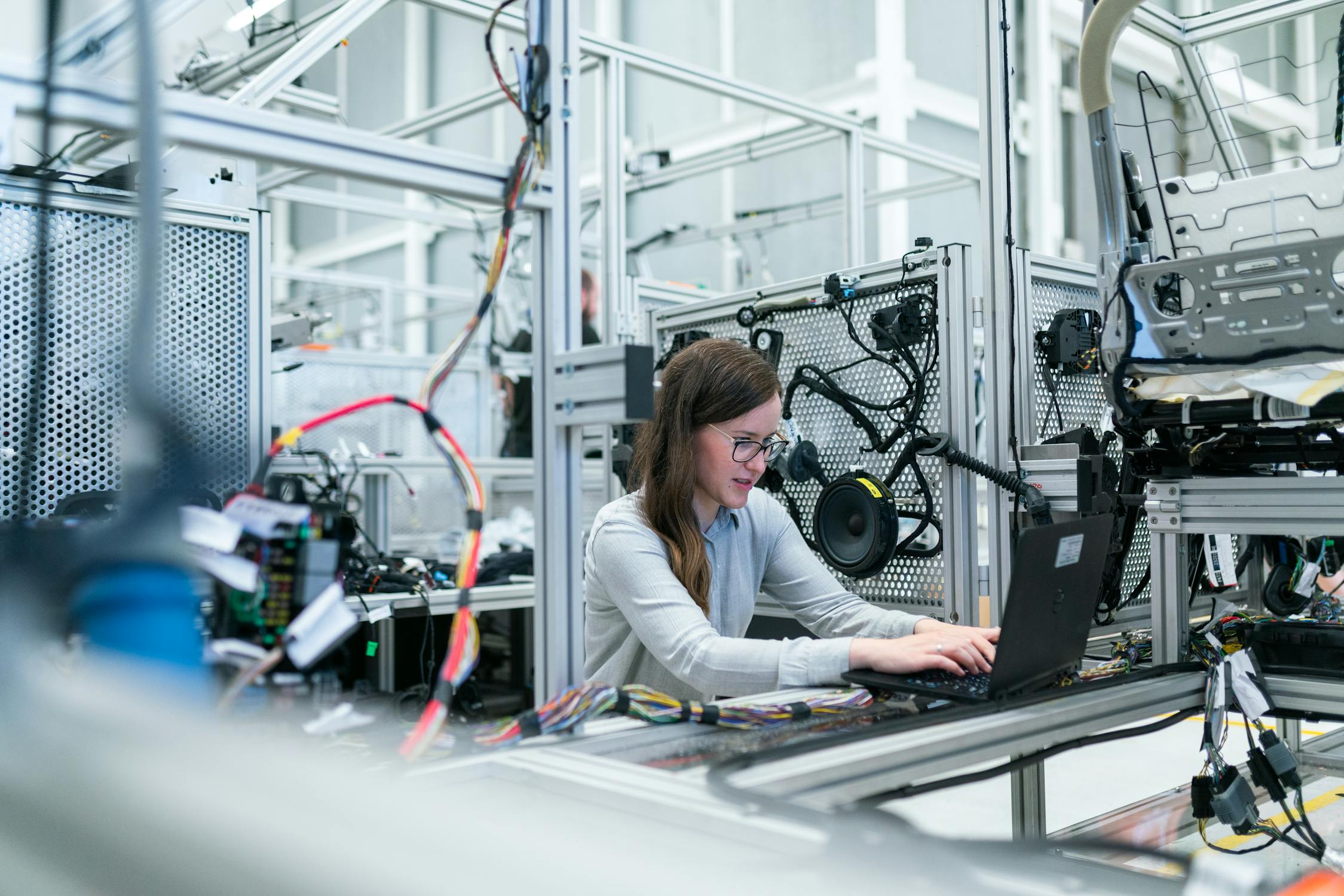
*Image Prompt: Collaborative work on a large digital screen with abstract data.*
Conclusion: The Future is Factual
RAG is more than just a technical tweak; it is a foundational upgrade that shifts the focus of **AI content** from mere fluency to verifiable accuracy. For anyone building a robust digital workflow, integrating RAG-powered systems means access to intelligent **tech tools** that can finally be trusted with mission-critical information.
The days of tolerating "AI hallucinations" are numbered. The future of **Smart Web & AI Resources** is factual, informed, and firmly grounded in a real-time, curated knowledge base, delivering truly intelligent **Computers & Electronics** solutions to the web.
Follow Us: For more updates, stories, and partner links — visit our official Facebook Page and explore Our Sister Sites.


No comments:
Post a Comment